Paleogenomic analysis of small mammals in the reconstruction of species responses to climate change
Can we use genomic sequences from fossil remains to reconstruct the relationship between species and climate change during the Late Glaciation and early Holocene? What did these relationships look like? These are the research questions we are trying to answer in this project. The research material consists of paleogenetic remains of several species of voles (Microtus sp.).
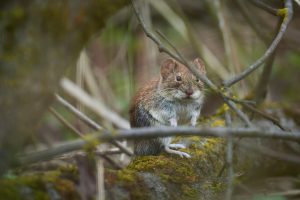
Bank Vole photographed by Tommes Frites
Why small mammals?
The simplest answer is their abundance at paleontological sites, which allows us to collect a series of specimens covering a range of successive climate changes. Therefore, we expect sampling to continue in subsequent periods.
How do we confirm the age of the samples?
Our previous research shows that vole molars contain well-preserved DNA in sufficient quantity and quality to analyze the nuclear genome and estimate their molecular age. In addition, some samples are subjected to direct radiocarbon dating. This is made possible by the latest techniques, which allow the use of even small samples, such as vole remains, enabling the accurate placement of population changes on a time scale and comparison of their occurrence with available paleoclimate records. In this project, we focus not only on identifying the responses of the populations to specific climate changes, but also on gaining a better understanding of the mechanisms behind these responses.
Research Focus
British Isles- The first aspect involves reconstructing the history of the postglacial population of the common vole (M. arvalis) and the field vole (M. agrestis) in the British Isles. The evolutionary history of both species has been thoroughly studied using mitochondrial DNA, but the colonization of the British Isles after the last glacial remains unexplained. In the case of the common vole, its natural presence on the islands has only recently been confirmed, while in the case of the field vole, genetic data suggest that the islands were colonized at least twice, with natural selection being the main factor shaping the modern population.
Western Carpathians- The second aspect addressed in the project concerns the reconstruction and comparison of four vole species in response to climate change in the Western Carpathians. We selected the common vole, the root vole (M. oeconomus), the narrow-headed vole (Lasiopodomys gregalis), and the bank vole (Clethrionomys glareolus). These species were not chosen at random, as they represent a wide spectrum of ecological niches, from cold and dry steppe tundra to temperate forests. We hope that, using the above species as examples, we will reveal a variety of responses, such as range changes, adaptations, and local extinctions.
Other intrests – Eurasia, Spermohillus
Meet the Team
 |
 |
 |
|
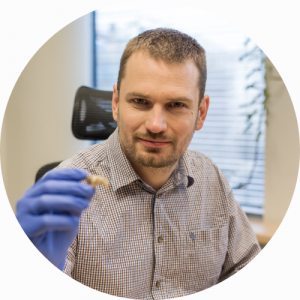
Principal Investigation Mateusz Baca |
Lab manager Barbara Bujalska |
PhD Student (Western Carpathians) Alicja Kaźmierkiewicz |
 |
||
|
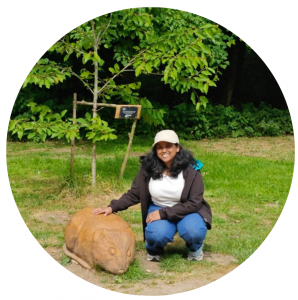
PhD Student (British Isles) Kaaviya Balakrishnan |
Student Weronika Baranowska |
Publications
- Barbara Bujalska, Michał Golubiński, Danijela Popović, Claudio Berto, Nicholas J. Conard, Anna Lemanik, Elisa Luzi, Zoran Marković, Adam Nadachowski, Vasil Popov, Ivan Horáček & Mateusz Baca: Biogeographic history of the Late Pleistocene and Holocene European small hamsters (subfamily Cricetinae), Scientific Reports 16: 4145, 2026; https://www.nature.com/articles/s41598-025-34298-4.
- Mateusz Baca, Barbara Bujalska, Danijela Popović, Michał Golubiński, Paulo C. Alves, Edouard Bard, Claudio Berto, Gloria Cuenca-Bescós, Love Dalén, Helen Fewlass, Tatyana Fadeeva, Jeremy Herman, Ivan Horáček, Magdalena Krajcarz, Matthew Law, Anna Lemanik, Juan Manuel López-García, Elisa Luzi, Xabier Murelaga, Ahmad Mahmoudi, Marco Peresani, Simon Parfitt, Joana Pauperio, Svetlana V. Pavlova, Piroska Pazonyi, Iván Rey Rodríguez, Jeremy B. Searle, Joanna Stojak, Tatyana Strukova, Jan M. Wójcik & Adam Nadachowski: The evolutionary history of the field vole species complex revealed by modern and ancient genomes, Genome Biology, 2026; https://link.springer.com/article/10.1186/s13059-026-03961-y.
- Claudio Berto, Mateusz Baca, Helen Fewlass, Greta Brancaleoni, Hugues-Alexandre Blain, Angel Blanco-Lapaz, Barbara Bujalska, Maciej T. Krajcarz, Aleksandra Kropczyk, Adrian Marciszak, Magdalena Moskal del Hoyo, Andrea Pereswiet Soltan, Marcin Szymanek, Krzysztof Wertz, Aleksandra Żeromska, Małgorzata Kot: Chronological, paleoclimatic, and paleoenvironmental data from Łabajowa Cave (Kraków-Częstochowa Upland, Poland): a comprehensive approach for investigating a complex Late Pleistocene sequence, Quaternary Science Reviews 376: 109778; https://www.sciencedirect.com/science/article/pii/S0277379125005980
- Alicja Anna Kaźmierkiewicz , Ahmad Mahmoudi , Boris Kryštufek , Miriam Belmaker , Danijela Popović , Barbara Bujalska , Anna Lemanik , Tatiana Strukova , Adam Nadachowski , Mateusz Baca: Evolutionary history of the Altai grey vole, Microtus obscurus (Rodentia: Cricetidae), reconstructed using modern and ancient genomes, Zoological Journal of the Linnean Society, Volume 204, Issue 3, July 2025, zlaf059. https://doi.org/10.1093/zoolinnean/zlaf059
- Mateusz Baca, Barbara Bujalska, Danijela Popović, Michał Golubiński, Paulo C Alves, Edouard Bard, Claudio Berto, Gloria Cuenca-Bescós, Love Dalén, Helen Fewlass, Tatyana Fadeeva, Jeremy Herman, Ivan Horáček, Magdalena Krajcarz, Matthew Law, Anna Lemanik, Juan Manuel López-García, Elisa Luzi, Xabier Murelaga, Ahmad Mahmoudi, Marco Peresani, Simon Parfitt, Joana Pauperio, Svetlana Pavlova, Piroska Pazonyi, Iván Rey Rodríguez, Jeremy B Searle, Joanna Stojak, Tatyana Strukova, Jan M Wójcik, Adam Nadachowski: The evolutionary history of the field vole species complex revealed by modern and ancient genomes; preprint.
- Edana Lord, Aurelio Marangoni, Mateusz Baca, Danijela Popović, Anna V. Goropashnaya, John R. Stewart, Monika V. Knul, Pierre Noiret, Mietje Germonpré, Elodie-Laure Jimenez, Natalia I. Abramson, Sergey Vartanyan, Stefan Prost, Nickolay G. Smirnov, Elena A. Kuzmina, Remi-André Olsen, Vadim B. Fedorov, Love Dalén: Population dynamics and demographic history of Eurasian collared lemmings; BMC ecology and evolution 126 (2022); doi.org/10.1186/s12862-022-02081-y
Relevant Posters
Ancient DNA clarifies the evolution of the field vole species complex, BACA_SMBE2023
Ancient DNA clarifies the evolution of the field vole species complex, BACA_ISBA2023
Collaborators and Contributors
- Prof. Ivan Horacek, Charles University, Czech Republic
- Dr Piroska Pazonyi, Hungary
- Prof. Adam Nadachowski, Institute of Animal Systematics and Evolution, Polish Academy of Sciences, Poland
- Prof. Claudio Berto, University of Warsaw, Poland
- Dr. Helen Fewlass, Max Planck Institute for Evolutionary Anthropology, Germany
- Dr Andrzej Romaniuk, United Kingdom
- Dr Jeremy Herman, Retired Curator, National Museum of Scotland, United Kingdom
- Dr Zena Timmons, Assistant Curator of Vertebrate Biology, National Museum of Scotland, United Kingdom
- Dr Siobhan Cooke-Miller, Curator, Orkney Museum, United Kingdom
- Dr Angharad Jones, Curator, Creswell Crags Museum, United Kingdom
- Dr Catriona Pickard, University of Edinburgh, United Kingdom
- Prof. Simon Parfit, Natural History Museum, London, United Kingdom
- Prof. John R. Stewart, University of Bournemouth, United Kingdom
- Prof. Nick Barton, University of Oxford, United Kingdom
And many more archaeologists, paleontologists, curators, and researchers who are directly or indirectly involved in the project.
Informacje archiwalne
